2 Oct 2026
30+ Dietitian-Approved Healthy Snacks
 Mina Pontarelli

22 Oct 2026
 True Health Team
Written by: True Health Team
Medically reviewed by: Anthony Pick, MD, CDCES, CCD, MSCP, Endocrinologist
Your bathroom scale tells you how much you weigh. A DEXA scan shows what a scale can’t: how much of you is muscle, fat, and bone, and where it sits. With a clear view of your lean mass and fat mass, you and your care team can build a more accurate personal health roadmap.
Here’s what a DEXA scan shows, who it helps most, including people taking GLP-1 medications, and how True Health uses your results.
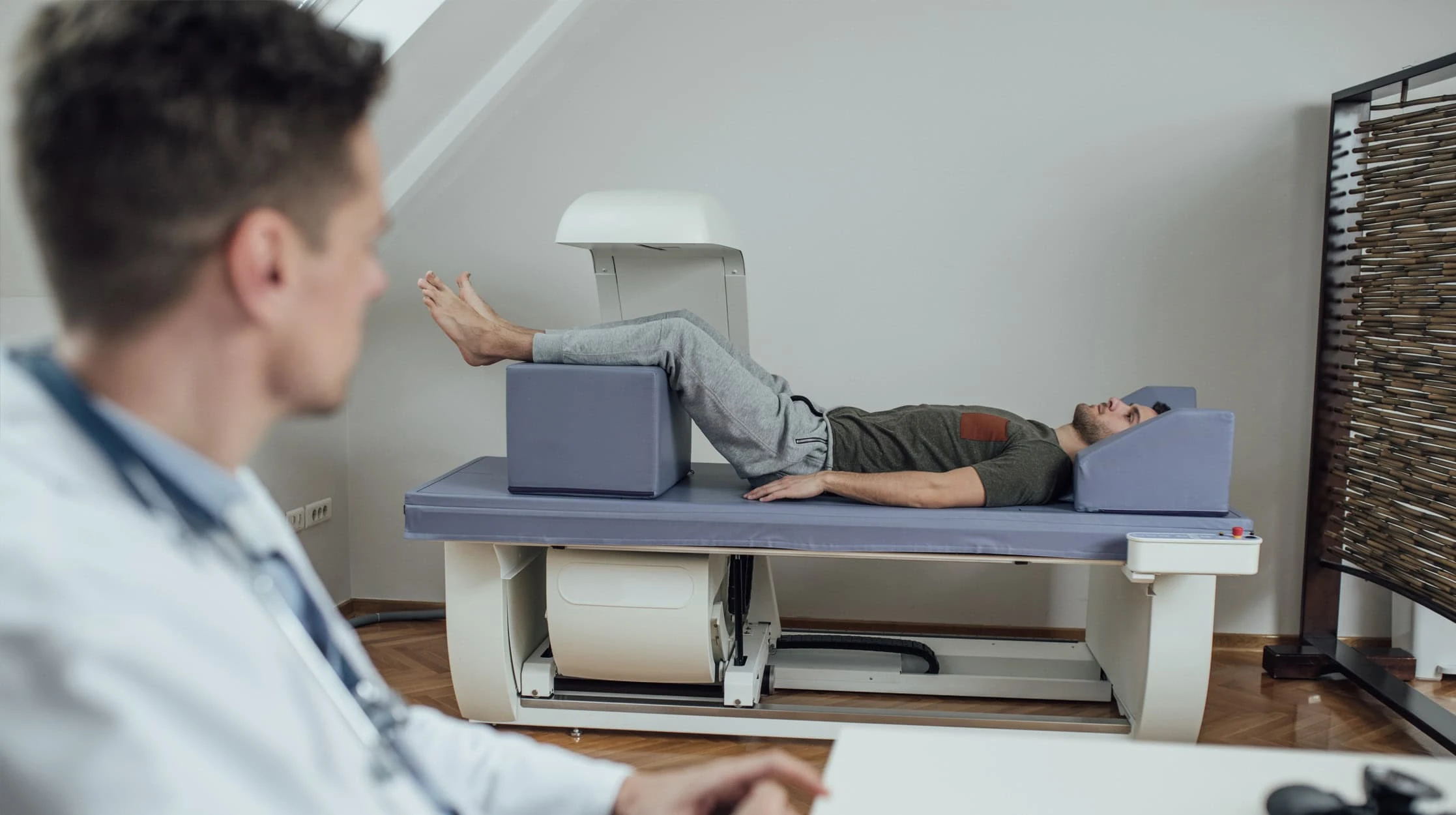
A DEXA scan (dual-energy X-ray absorptiometry) is a quick, low-dose X-ray body composition scan that shows how much of your body is fat, muscle, and bone, and where each one is. It also estimates your visceral fat, the fat stored deep in your belly around your organs.
Many people search for it as a body fat scan, but it measures much more. Here’s what your results include:
| What DEXA scan measures | What a DEXA scan tells you | Why it matters |
|---|---|---|
| Body fat percentage | How much of your weight is fat | A clearer picture than weight or BMI alone |
| Visceral fat | Fat stored deep in your belly, around your organs | Closely tied to heart health and type 2 diabetes risk |
| Where fat is stored | Whether fat sits more around your waist or your hips and thighs | Fat around the waist is linked to higher heart and metabolic risk |
| Lean mass (includes an estimate of muscle) | Lean tissue, including muscle, in your arms, legs, and core | Muscle supports strength, mobility, and metabolic health |
| Left and right side | Whether one side carries more muscle | Helps guide your training |
| Bone mineral content | Bone mineral across your whole body | Rounds out your body composition picture. If osteoporosis is a concern, your physician may recommend a hip and spine bone density scan. |
A DEXA scan gives you a starting point. You learn what your body is made of today, and future scans show how it changes.
See more than your weight.
Two people can weigh the same and have very different amounts of muscle and fat.
Track progress the scale misses. If you build muscle and lose fat at the same time, your weight may barely move. Someone who loses 8 pounds of fat and gains 3 pounds of lean mass has made real progress, even though the scale only shows 5 pounds.
Lose fat and keep muscle.
If you’re losing weight, follow-up scans show where the weight is coming from.
“The scale tells you how much you’ve changed, but not what changed. A DEXA scan shows me whether a patient is losing fat or lean mass and where their fat is stored, which matters far more for long-term health than the number on the scale.” – Anthony Pick, MD
Visceral fat sits deep in your belly, around your internal organs. It plays a role in heart health and blood sugar. Your care team can build nutrition and exercise plans that target it, and follow-up scans show whether it’s changing. Between scans, your care team may also track your waist measurement, a quick check that tends to move with visceral fat.
“The biggest surprise is usually visceral fat. Two people with the same weight and BMI can carry very different amounts of fat around their organs, and that deep fat is strongly linked to diabetes and heart disease.”
– Anthony Pick, MD
A DEXA body composition scan can be helpful at many stages of life and for many health goals.
Healthy aging.
Adults in midlife and beyond can track muscle and bone as they age. For women in perimenopause and menopause, bone health becomes especially important, and a DEXA body composition scan tracks whole-body bone along with lean mass and fat, though it doesn’t replace a hip and spine bone density test to check for osteoporosis.
Weight and metabolic health.
If your weight and BMI look healthy but you don’t feel your best, a DEXA scan shows how much body fat and visceral fat you carry. Visceral fat is closely tied to blood sugar, so it’s a useful target for people with prediabetes, type 2 diabetes, or other metabolic concerns. If you’re losing weight, including after weight-loss surgery, follow-up scans show whether you’re losing fat while keeping muscle.
Strength and performance.
Athletes, active adults, and anyone who strength trains can see muscle gains over time, with results by body region to help guide training. If you’re returning from an injury, surgery, or time off, comparing your left and right side shows where muscle may need rebuilding.
If you’re taking a GLP-1 medication like semaglutide or tirzepatide, a DEXA scan can show what your weight loss is made of. The scale shows how much weight you’ve lost. A DEXA scan shows how much of that loss is fat and how much is lean mass, which includes muscle.
This matters because some of the weight lost on these medications can be lean mass, including muscle.
For someone taking a GLP-1, a DEXA scan can help:
Our Registered Dietitian Nutritionists (RDNs) and Certified Health Coaches can use your results to build a personalized nutrition and strength plan that protects your muscle while you lose fat.
Your DEXA results connect to more than one part of your health, so they help shape your nutrition, training, and primary care.
Primary care. Muscle, bone, and visceral fat connect to heart health, blood sugar, and healthy aging.
Nutrition. Your RDN can pair your results with resting metabolic rate testing to set protein and calorie targets that fit your body.
Movement. When lean mass is low, your plan can put strength training first. Differences between your left and right side can also guide your training. DEXA shows how much lean mass you have, not how well your muscles work, so a functional movement and strength screen, including strength and balance, rounds out the picture.
Your first DEXA scan results show where you are today. That baseline is what makes every future scan useful, because it gives you something real to measure against. As we shared in No More New Years Resolutions, the goals that stick are specific and measurable.
After your scan, you and your physician review the results together. The review typically starts with muscle, then body fat, then where fat is stored. From there, you agree on a clear next step and when to scan again to track your progress.
Your goals are built around changes in body composition, not a number on the scale. Your results also guide our RDNs and Certified Health Coaches as they shape your nutrition and training plans.
“DEXA results tell us what to work on and who on our team is best placed to help: a dietitian when protein or visceral fat is the priority, a health coach when strength training is, and a physician when bone health, blood sugar or medication decisions are involved. Repeat scans under the same conditions then show whether the plan is working.” – Anthony Pick, MD
A DEXA scan is a quick, low-dose X-ray that measures the fat, muscle, and bone in your body.
It shows your body fat percentage, visceral fat, lean mass (includes an estimate of muscle) in your arms, legs, and core, and bone across your whole body.
It depends on your goals. If you want to know what your weight is made of, track changes in muscle and fat over time, or understand your visceral fat, a DEXA scan gives you detail that a scale or BMI can’t. Your physician can help you decide whether it fits your care plan.
The scan itself takes about seven minutes.
No special prep is needed. Wear clothes without metal, like zippers, buttons, or underwire. Let our team know if you’ve had a recent imaging test with contrast, a barium study, or a nuclear medicine scan, or if you are pregnant or may be. [2] For follow-up scans, try to come in at a similar time of day, with similar eating, drinking, and exercise beforehand, so changes reflect your body and not the conditions.
A DEXA scan shows how much of your weight loss is fat and how much is lean mass, which includes muscle. That helps you and your care team adjust nutrition and strength training to protect muscle while you lose weight.
DEXA is widely used in research as a reference method for checking other body composition tools, like InBody. InBody and smart scales are useful for tracking trends, but their readings can change with hydration, meals, and exercise. DEXA can shift a little with hydration and meals too, so very small changes between scans may fall within normal measurement variation. Your physician will tell you whether a change is large enough to be meaningful.
Both use the same DEXA machine. A body composition scan looks at your whole body. A bone density scan looks closely at your hip and spine to check for osteoporosis. [3]
A DEXA scan uses a very low dose of radiation, well below a standard chest X-ray[1]. If you are pregnant or think you may be, tell our team before your visit.
True Health offers DEXA scans at our Deerfield location – 111 S Pfingsten Rd, Suite 300.
A DEXA body composition scan is one part of the advanced testing in True Health’s Optimized Healthcare model, available at our Deerfield office. Learn more about our diagnostic testing and our approach to preventive care, or schedule a consultation to talk with our team about your goals.
1. Baylor College of Medicine Body Composition Lab: The DXA process (radiation dose compared with a chest X-ray)
2. Adventist Health: DXA scan prep guidelines and FAQs (clothing, recent contrast exams, and pregnancy)
3. International Society for Clinical Densitometry: 2023 Adult Official Positions (hip and spine sites used to diagnose osteoporosis)
True Health Team
Get insights, recipes, and tips for a healthier life delivered right to your inbox.
Get insights, recipes, and tips for a healthier life delivered right to your inbox.
Health insights are coming your way. Check your inbox.